IVDD in Dogs: A Calm Home Routine for Dachshunds and Other Breeds

In short
- IVDD (intervertebral disc disease) is when a disc in the spine bulges or bursts and presses on the spinal cord. It is most common in short-legged, long-backed breeds such as Dachshunds, and French Bulldogs are also prone to it.
- In a UK survey of over 2,000 Dachshunds, around 1 in 6 had been diagnosed with IVDD, rising to around 4 in 10 by the age of 8 to 10.
- Sudden back pain, wobbling or weak back legs are an emergency. See a vet the same day.
- Many dogs recover well with rest and vet care. Afterwards, a calm, consistent home routine is what owners tell us makes the biggest difference to everyday life.
- Below: the warning signs, what recovery can look like, home tips, and how our customers fit red light into their dog's routine once their vet is happy.
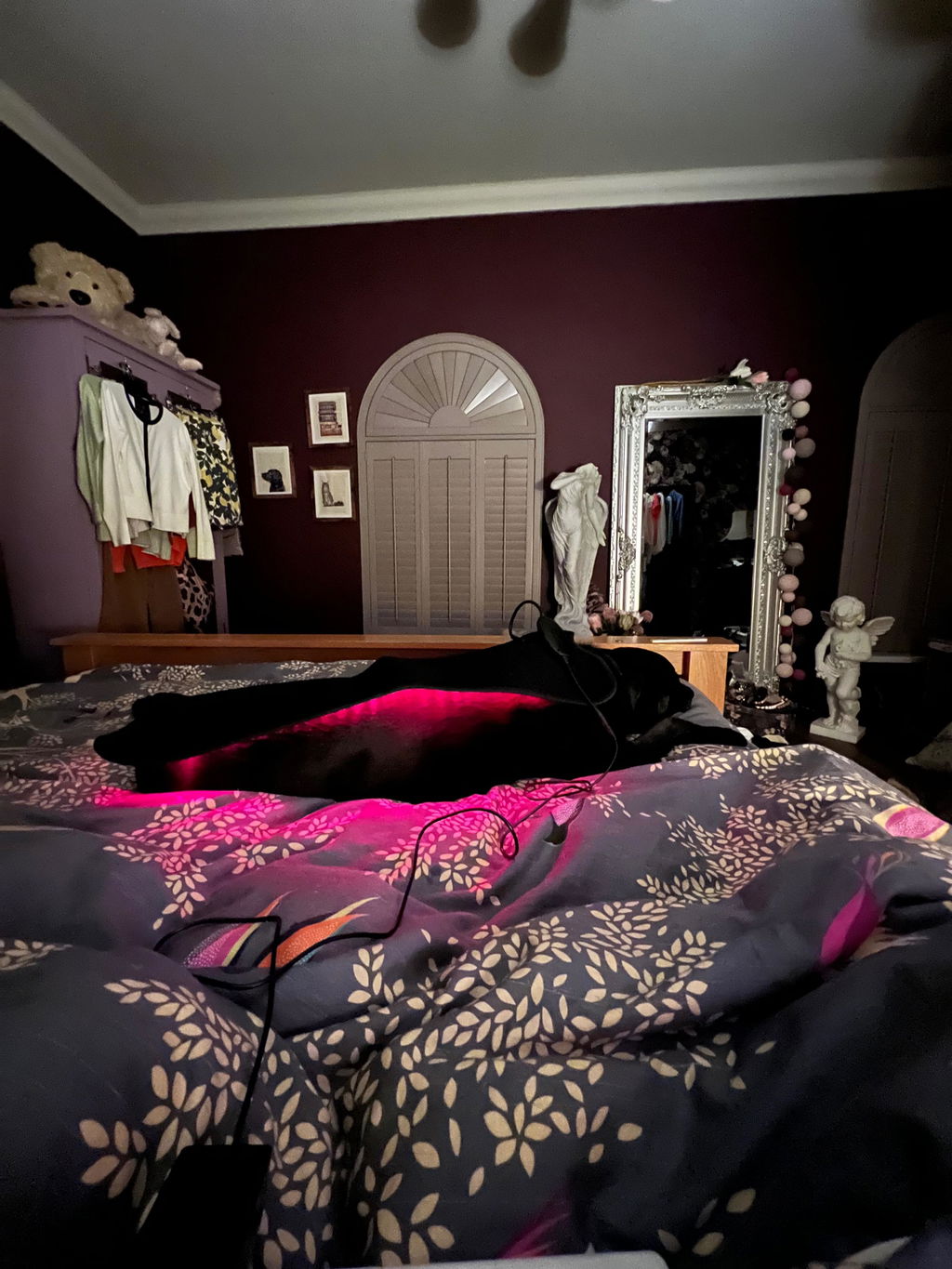
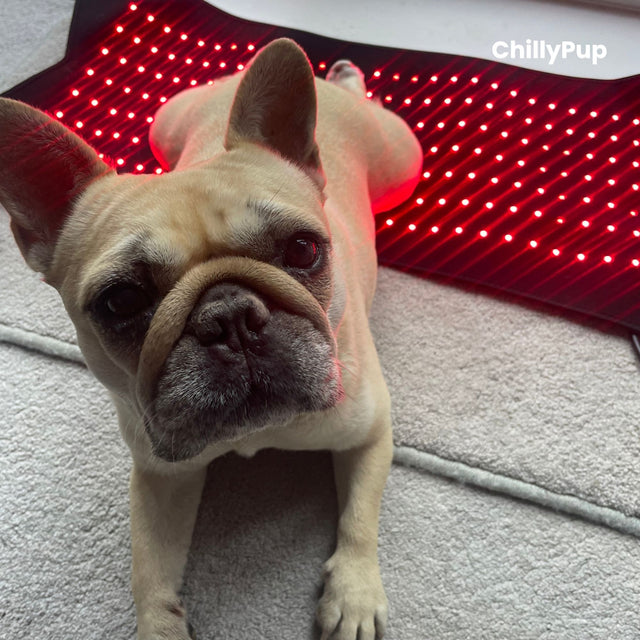
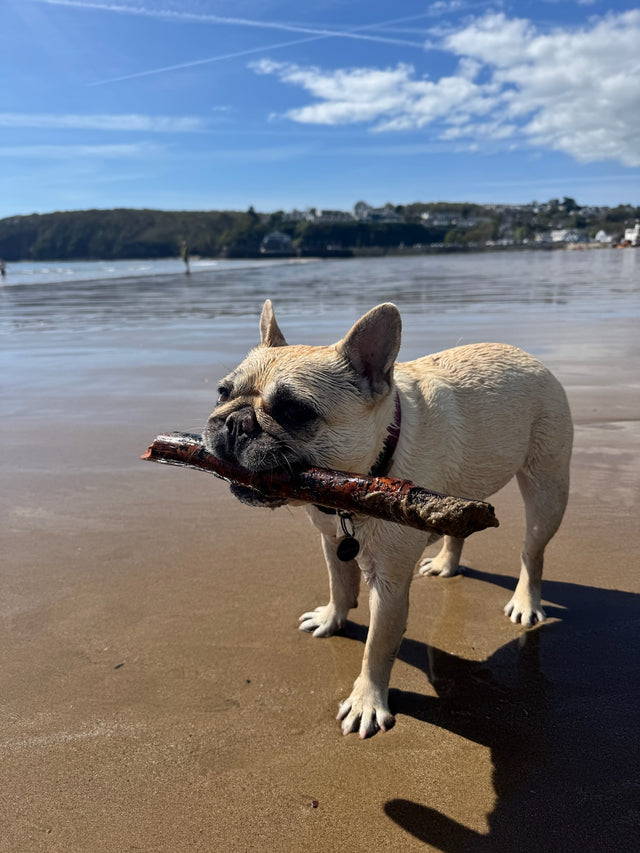
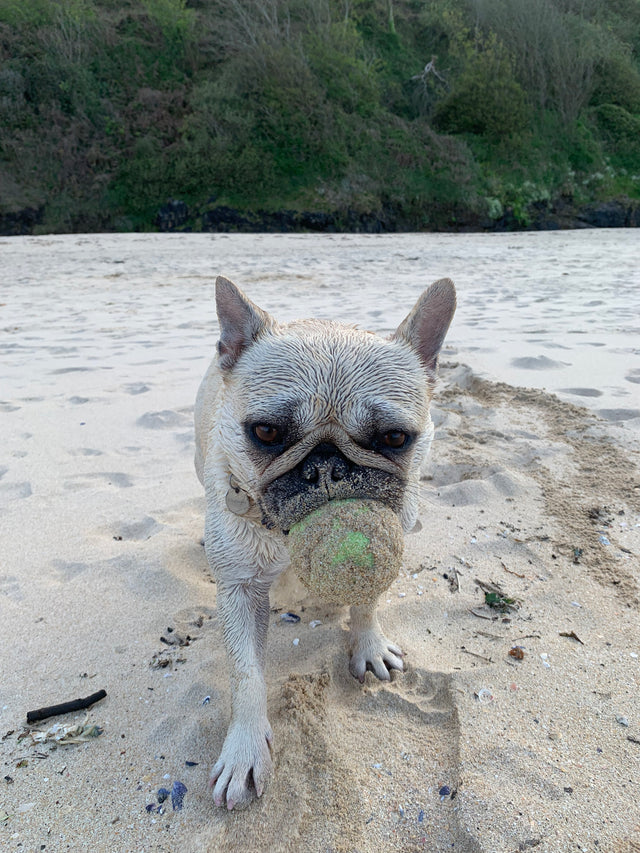
Few words worry a Dachshund or Frenchie owner more than "IVDD". As French Bulldog owners ourselves, it is a conversation we have with customers most weeks. Our own dog Mila does not have IVDD, but plenty of the dogs we hear from do, and many of them now have a quiet red light session as part of their day.
She does live with a snapped cruciate ligament in her left back leg, though, and one of the reasons we chose not to operate was that straightening that leg would put more pressure on her spine. So her back is never far from our minds either.
This guide is written by dog owners, for dog owners. Diagnosis and treatment always sit with your vet, and with IVDD speed matters, so the warning signs come first.
Go to a vet or emergency vet the same day if you see:
- Sudden weakness, wobbling or dragging of the back legs
- Your dog cannot stand or walk
- Crying out when picked up or touched along the back, or a hunched, tense posture
- Loss of bladder or bowel control
Do not wait to see if it settles, and do not start any new home routine until your vet has seen your dog.
Shop the red light rangeFind the right fit
What is IVDD?
The spine is made of small bones (vertebrae) with cushioning discs between them. In IVDD, a disc degenerates and either bulges or bursts, pressing on the spinal cord. That can cause anything from back pain and a reluctance to move to weakness or paralysis in the back legs. Breeds with short legs and long backs, described by vets as chondrodystrophic, have discs that tend to age early, which is why Dachshunds are so closely linked with it. French Bulldogs and other short-legged breeds are also prone to disc problems.
How common is IVDD in Dachshunds?
The DachsLife 2015 study surveyed owners of 2,031 Dachshunds, mostly in the UK. Overall, 15.7%, around 1 in 6, had a vet-diagnosed IVDD episode.[1] Risk varied by type and rose sharply with age:
| Dachshund type | Dogs diagnosed with IVDD |
|---|---|
| Standard smooth-haired | 24.4% |
| Miniature wire-haired | 17.7% |
| Miniature smooth-haired | 17.1% |
| Miniature long-haired | 13.3% |
| Standard long-haired | 12.6% |
| Standard wire-haired | 7.1% |
By age, around 1 in 3 Dachshunds aged 6 to 8 and around 4 in 10 aged 8 to 10 had been diagnosed.[1]
Early signs worth a vet appointment
- Reluctance to jump, climb the stairs or get up
- Yelping when picked up
- A hunched back, tucked-in tummy or trembling
- Not wanting to lower the head to eat or drink (a possible sign of neck pain)
- Going quiet, off food or not wanting to move
What recovery can look like
Treatment depends on how severe the signs are and is decided by your vet, often after imaging. Milder cases are commonly managed with strict rest and medication, and more severe cases may need surgery.
Plenty of dogs do get back on their feet. A 2024 UK study followed 72 small dogs who could not walk after a disc extrusion and were managed without surgery. Of the dogs who still had deep pain sensation, 96% were walking again within 12 weeks, at a typical (median) 11 days. Of those who had lost it, 48% recovered within 12 weeks.[2] That gap is why getting to a vet quickly matters so much.
Everyday life after an episode
Once your vet has given the all clear, owners tell us the same things make the biggest difference:
- Steady, regular exercise. In DachsLife, Dachshunds who had more than an hour of exercise a day were less likely to have had IVDD than those who had under 30 minutes.[1] Build up gradually and follow your vet's plan.
- Ramps and steps. To the sofa, the bed and the car, so there is no question of leaping down.
- Lift with two hands. One under the chest and one under the bottom, keeping the back level.
- Grip underfoot. Rugs on slippery floors stop scrabbling and twisting.
- A harness, not a collar. Especially important for dogs who have had neck problems.
- A healthy weight. A sensible goal for every dog, and one less thing to worry about.
Where red light fits in
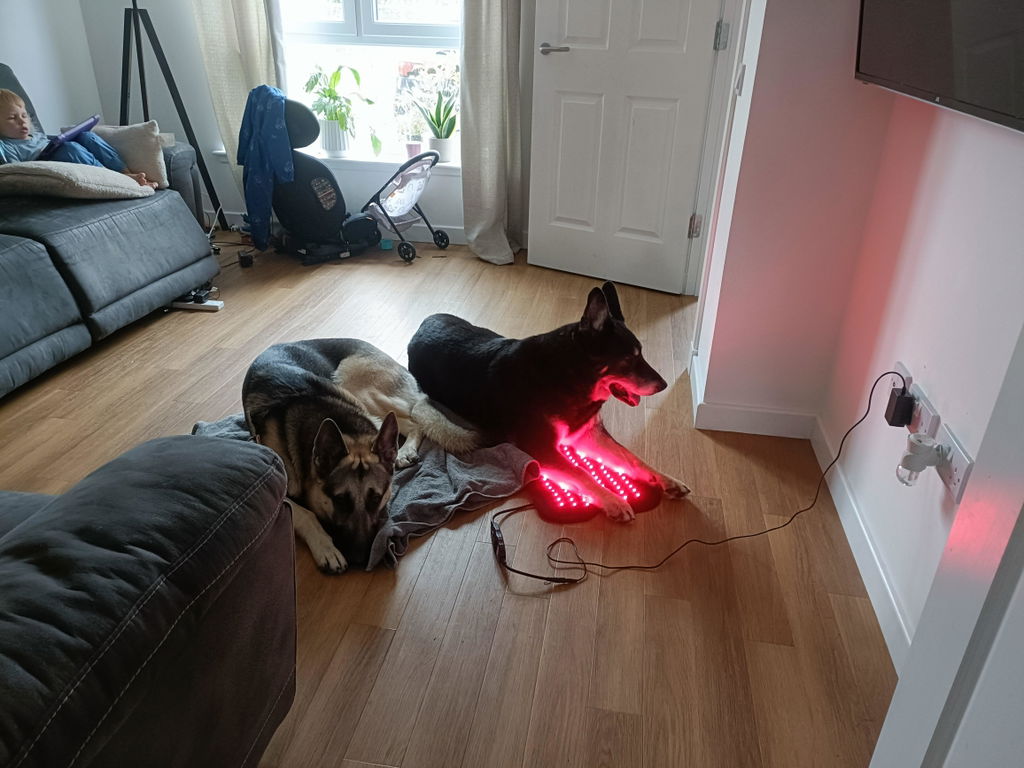
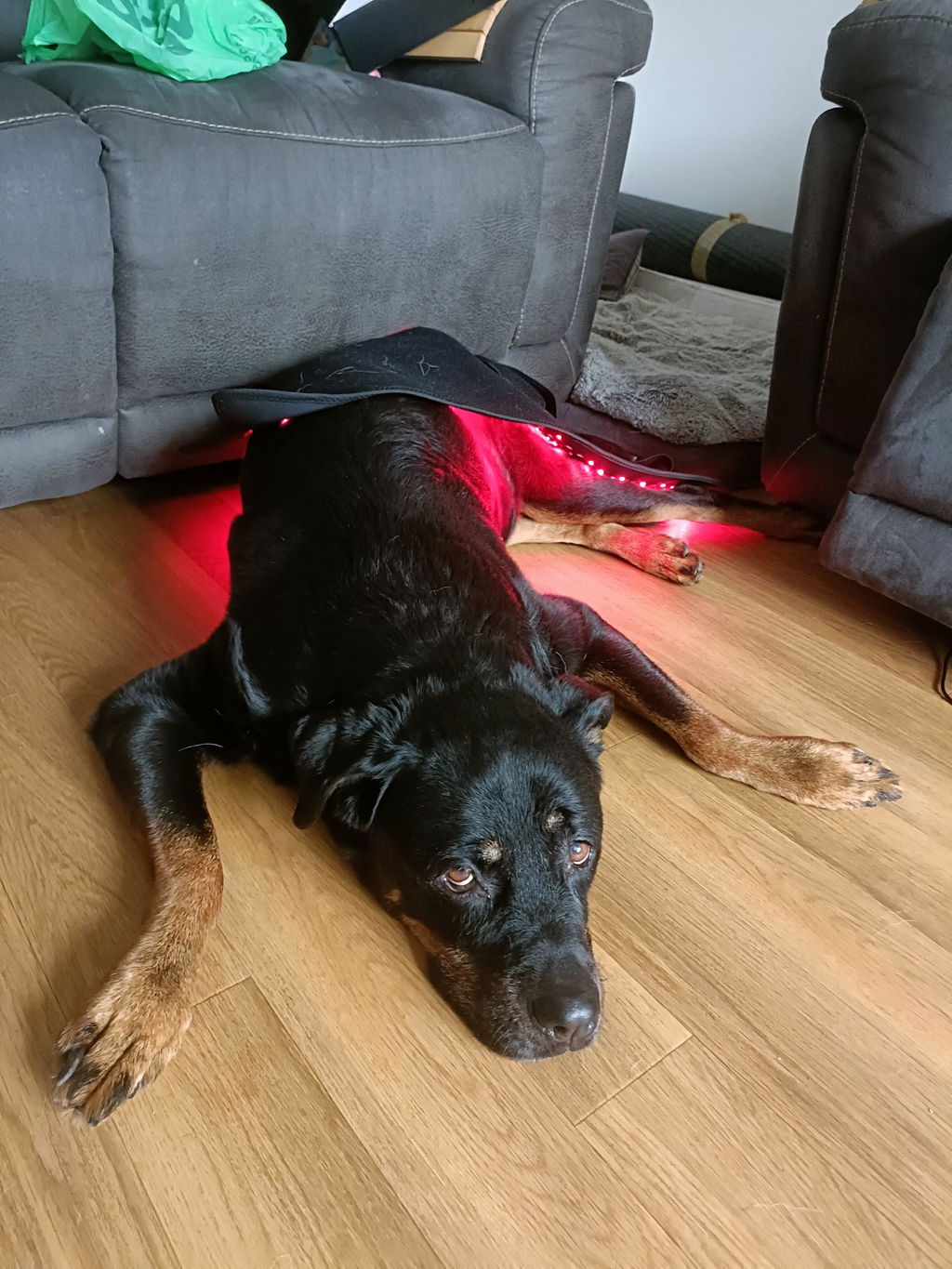
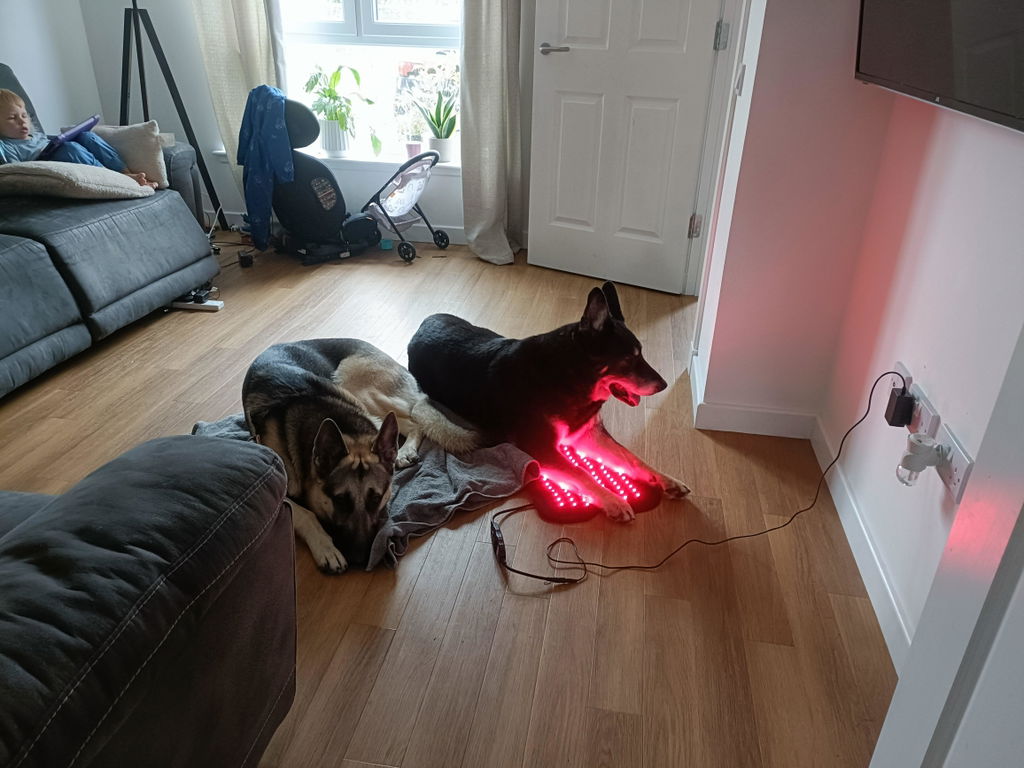
Red light therapy is not a treatment for IVDD and should never replace rest, medication, surgery or rehabilitation your vet has recommended. What many owners do, once their vet is comfortable with it, is add a short, calm red light session to their dog's day as a comforting part of the routine.
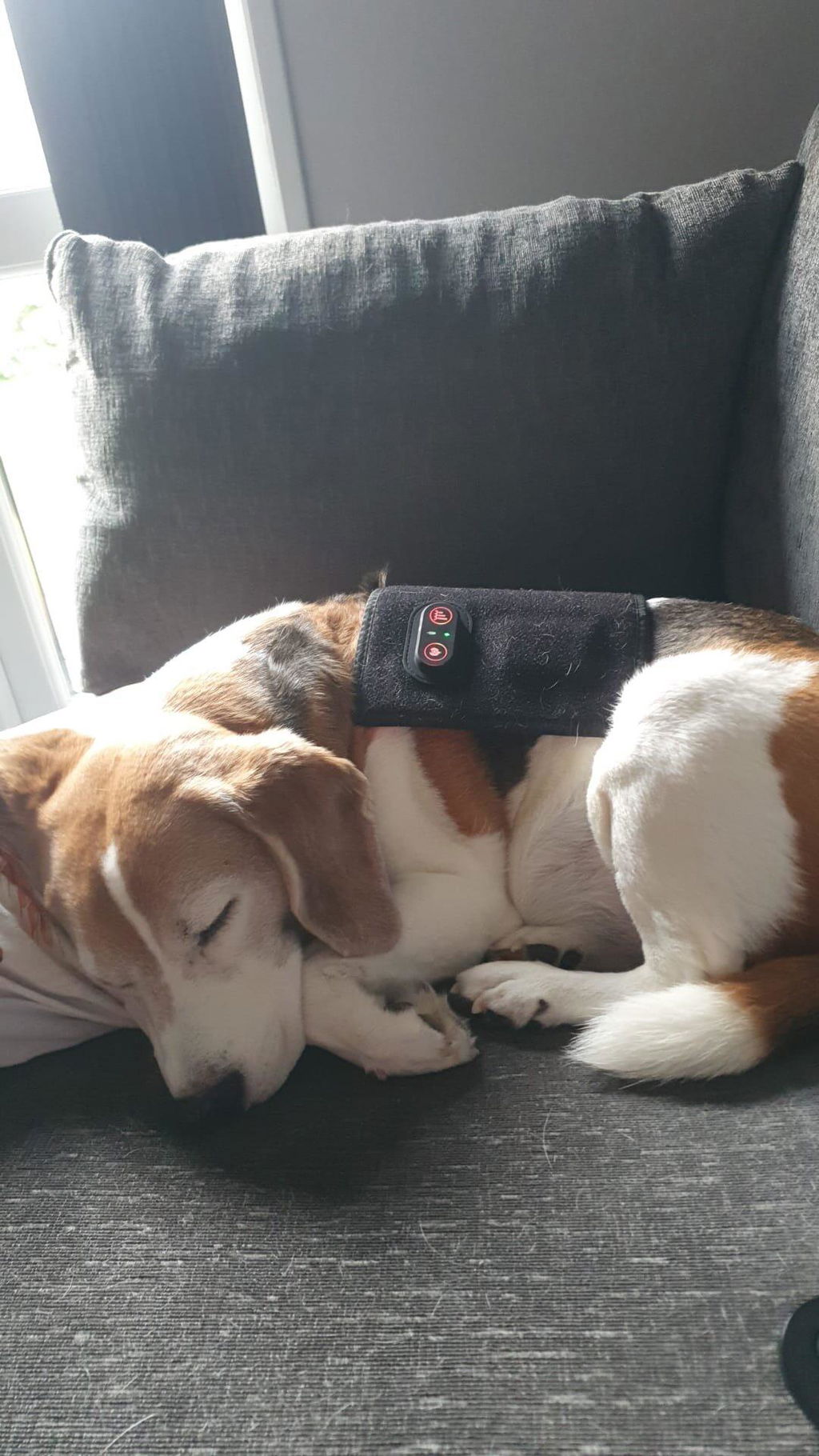
Hamish, a friend's miniature Dachshund, has the Small Cordless Pad strapped around him as part of his routine while he recovers from IVDD. Because it is cordless, there is no cable to trip over and nothing to stop him settling wherever he is comfortable.
A few things we always suggest:
- Vet first. Wait for your vet's go-ahead after an episode or surgery, and keep any device away from a surgical wound until it has fully healed.
- Start low and short. The lowest setting for a few minutes, building up over the first week.
- Never force a position. Let your dog settle where they are comfortable, and avoid twisting or bending the back to fit anything on.
- Consistency over length. 10 to 15 minutes, most days, rather than long occasional sessions.
- Stop and call your vet if you notice any new weakness, wobbling, pain or change in bladder control.
What other owners tell us
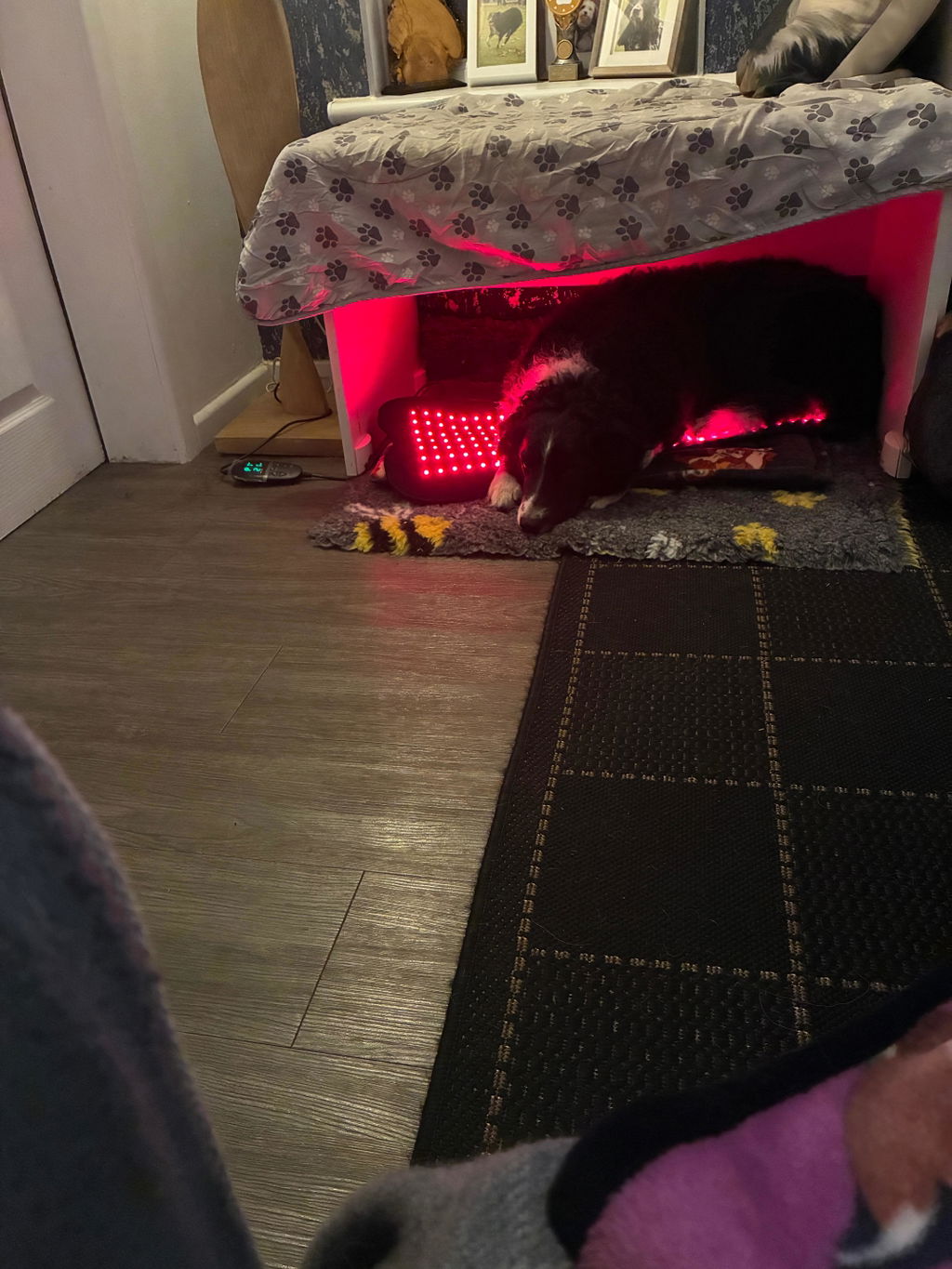
These are real reviews left by ChillyPup customers, quoted word for word with the photos they added. Every dog is different, and you can read all of our reviews on our reviews page.
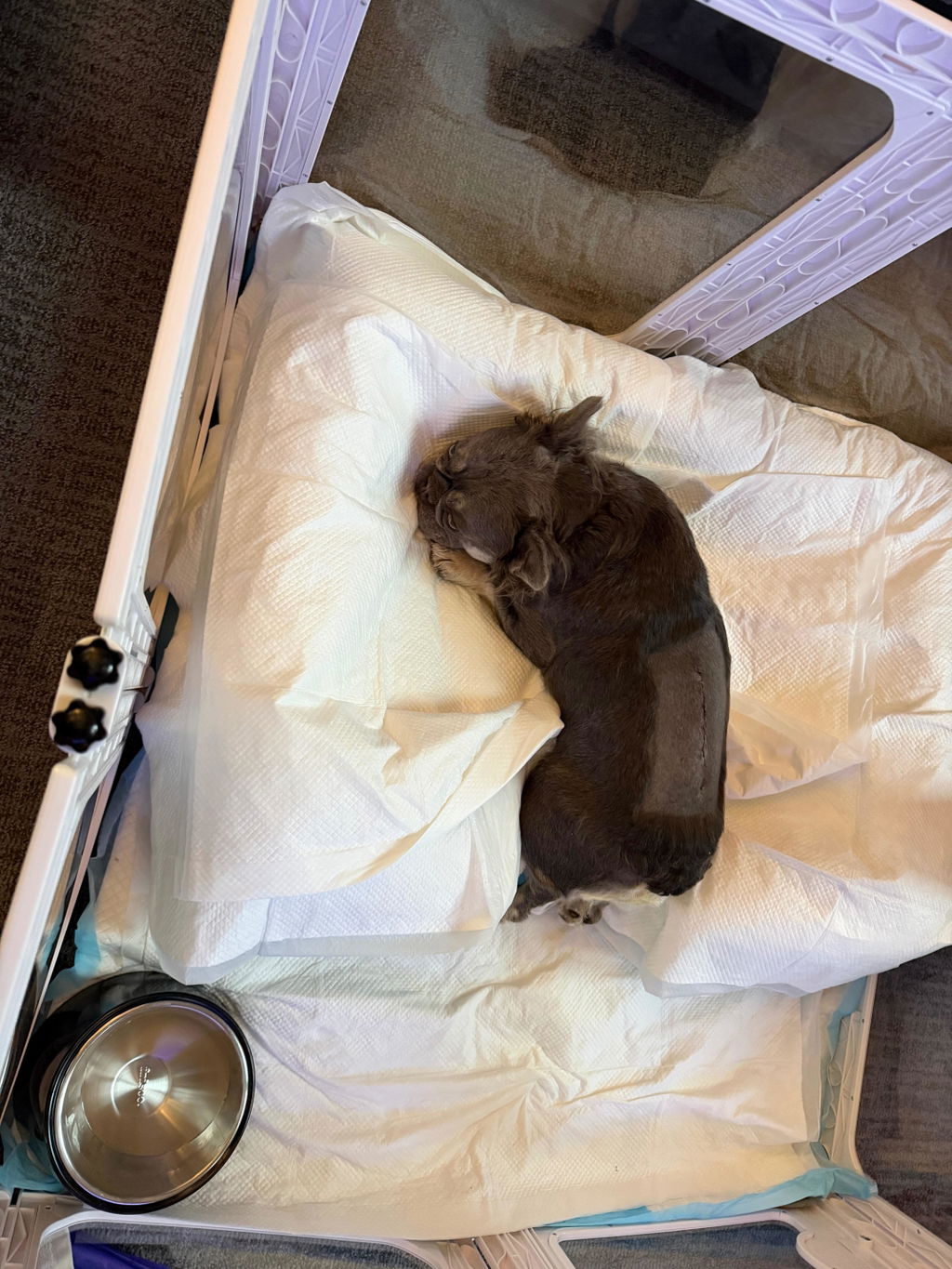
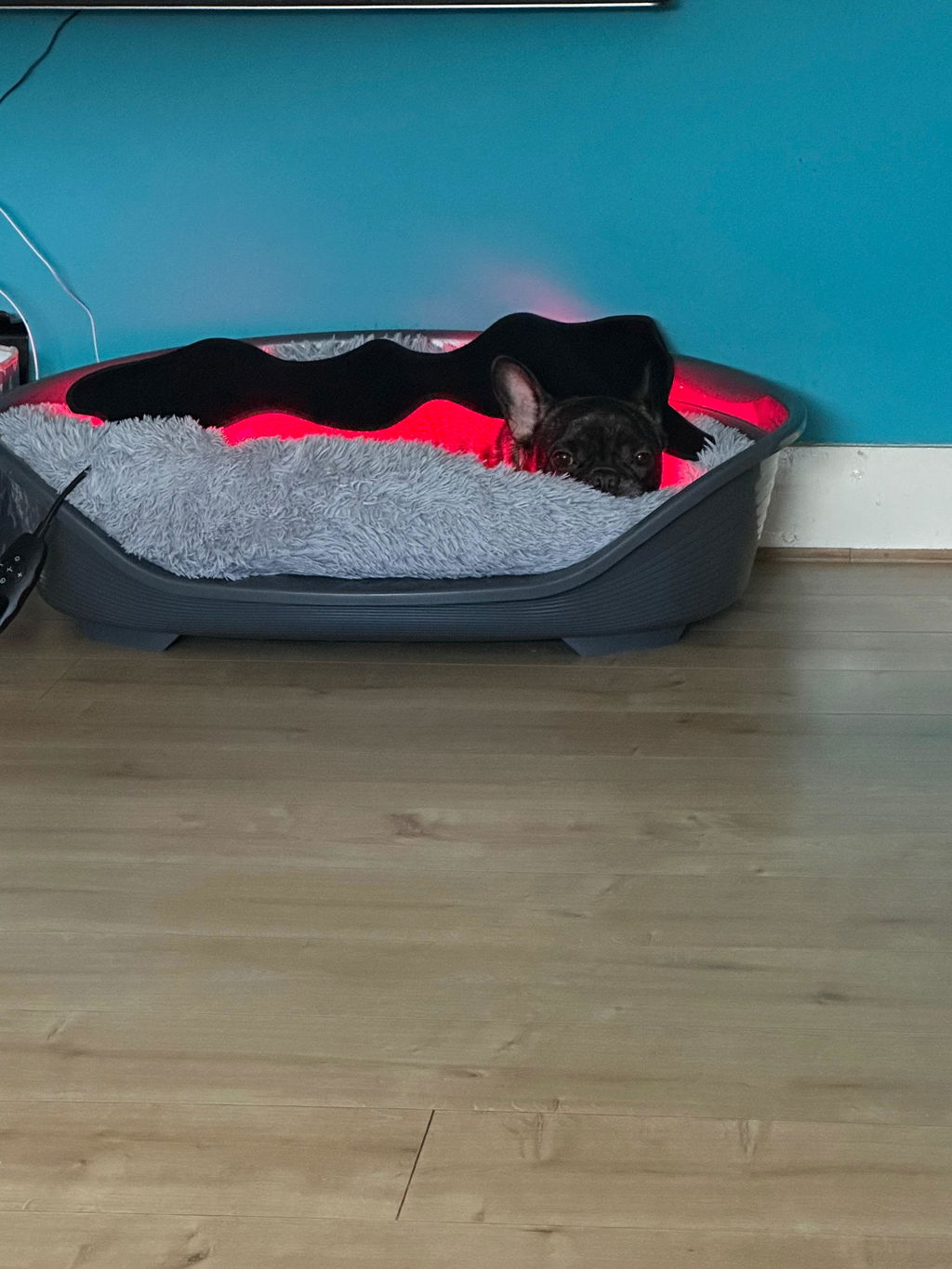
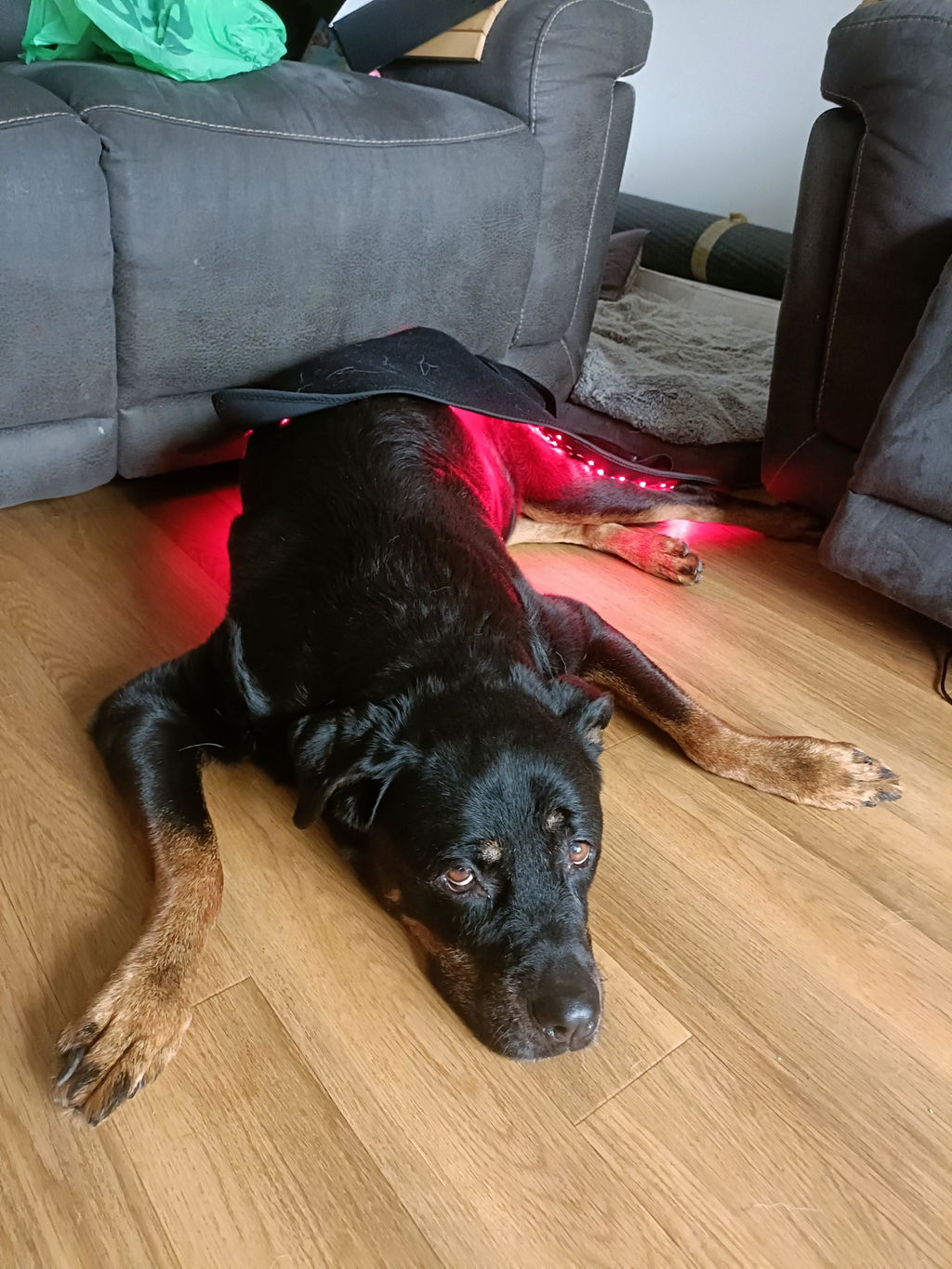
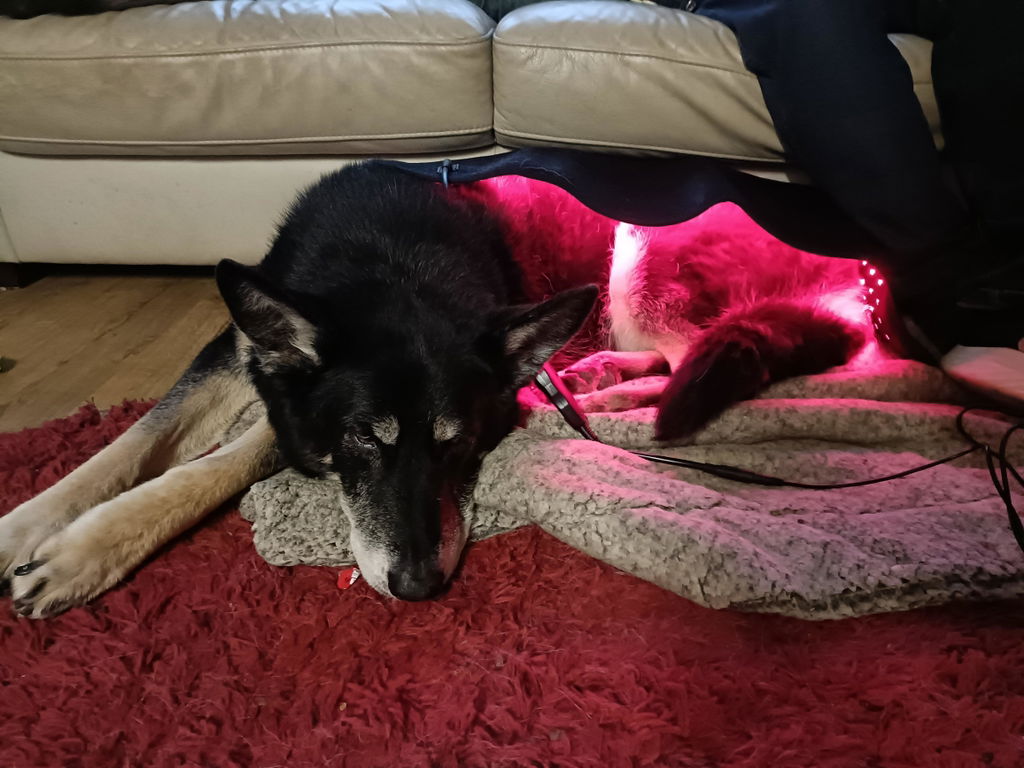
“Our three-year-old French Bulldog, Buddy, recently had emergency spinal surgery for IVDD. ... Buddy is doing very well, and we are using the wrap as part of his recovery routine.”
Charles Simon, Verified buyer, August 2026. About Buddy, his French Bulldog. Back Wrap
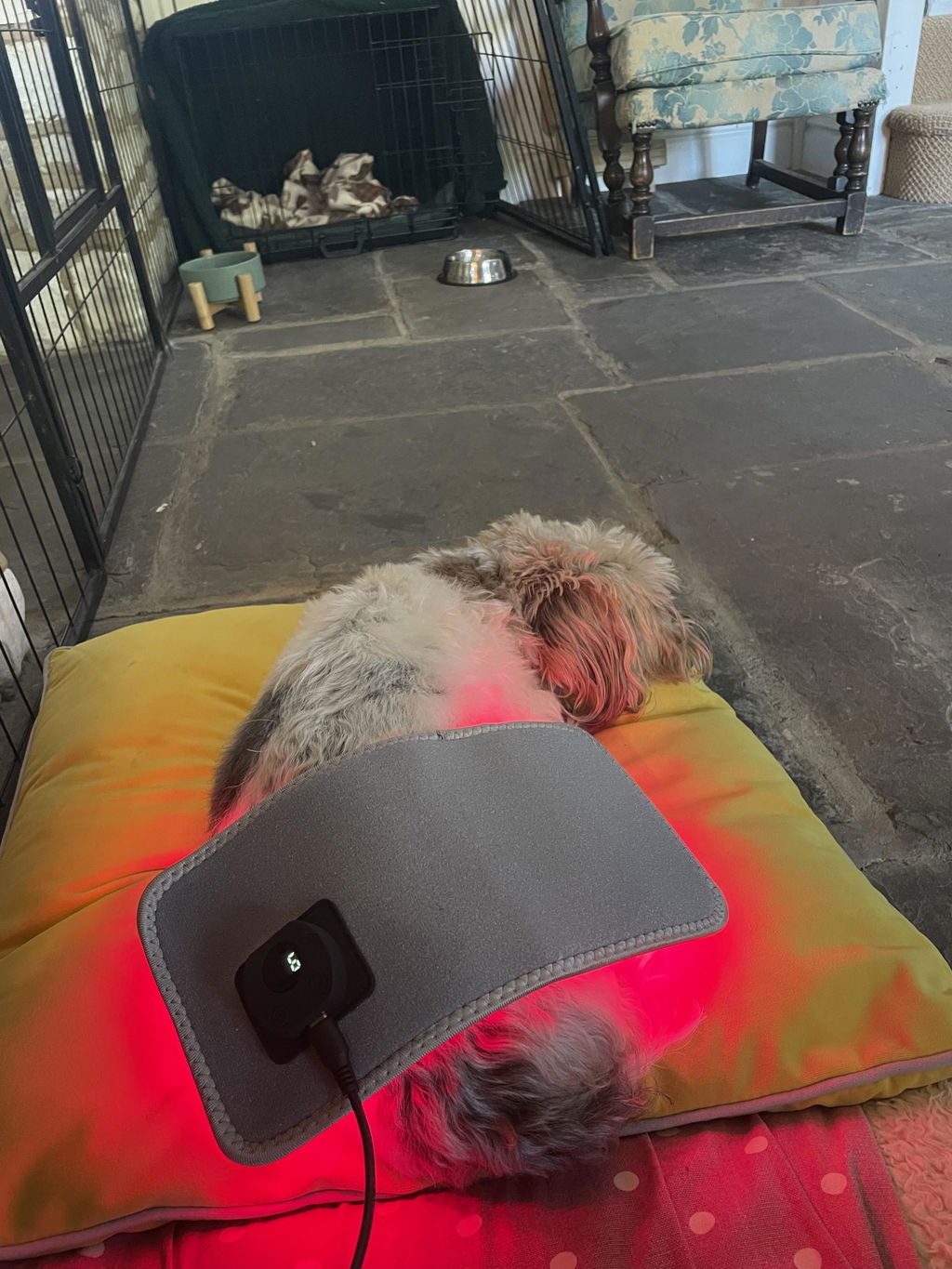
“Our JR is recovering from IVDD, he has weakness in his hind legs ... He is very relaxed with it strapped over his back area when he's resting.”
Charlotte Arnold, Verified buyer, May 2026. About her Jack Russell. Small Cordless Pad
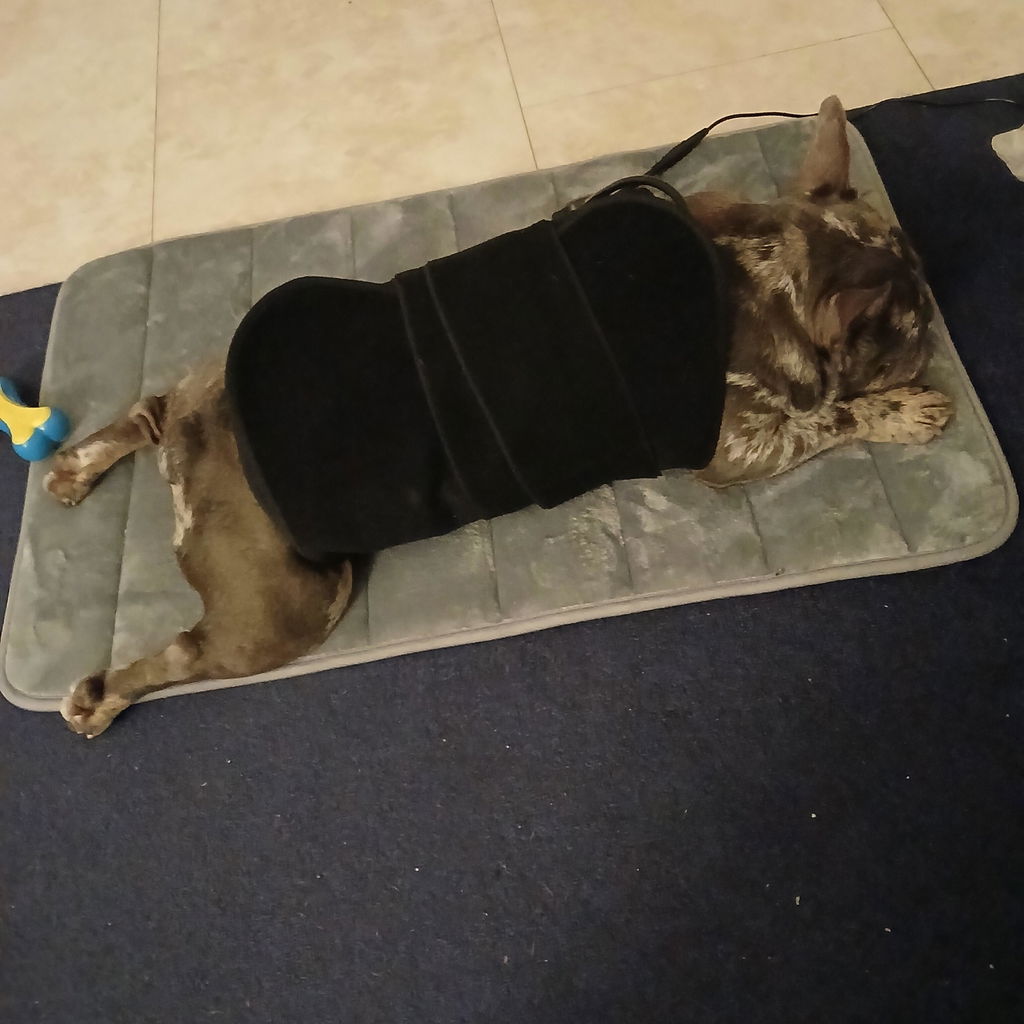
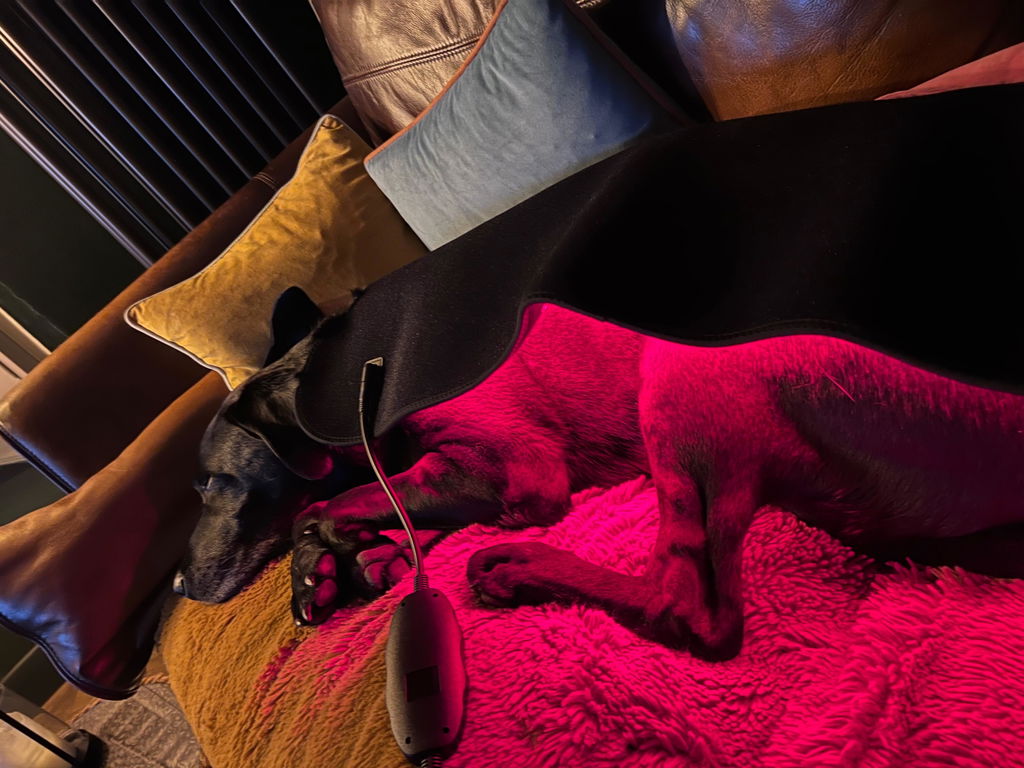
“I bought this because my doggo was diagnosed with IVDD and had to have spinal surgery. ... Each time I turn it on, he melts into the pillows and has the best sleep”
Roxy, Verified buyer, September 2026. About her dog after spinal surgery. Large Red Light Therapy Pad
Which product suits a dog with a back problem?
| Product | Best for | Good to know |
|---|---|---|
| Small Cordless Pad | Smaller dogs such as Dachshunds, strapped along the back | Cordless, 60 LEDs, long and short straps included |
| Medium Cordless Pad | A longer stretch of back, or a larger dog | Cordless, 60 LEDs, up to 89 mW/cm², 20-minute auto-off, strap included |
| Back Wrap | Covering the whole back in one go | Cordless, 84 LEDs, fastens at the neck and under the belly, 30-minute auto-off |
| Large Pad | Lying on or draping over, for a full-body evening routine | 210 LEDs, five power settings, up to 124.1 mW/cm² |
Not sure which suits your dog? Try our fit finder, or get in touch and tell us about your dog.
Frequently asked questions
Can red light therapy be used for a dog with IVDD?
Many owners use it as a comforting part of their dog's routine once their vet has assessed and treated the problem. It is not a treatment for the disc itself, and it has no place during a sudden episode, which needs a vet the same day.
Can I use it after my dog's back surgery?
Only once your vet or surgeon is happy, and never over a wound that has not fully healed. Follow their recovery timeline first.
Can red light therapy prevent IVDD?
There is no evidence that it does, and we would never say so. Steady exercise, ramps, careful lifting and regular vet checks are the everyday basics.
Do French Bulldogs get IVDD?
Yes. French Bulldogs are prone to disc problems, and we regularly hear from Frenchie owners after an episode. The same rule applies: vet first, then a calm routine.
Should I stop my Dachshund jumping on the furniture?
It is commonly advised, but the research is mixed. In DachsLife, dogs not allowed to jump were actually more likely to have had IVDD, possibly because owners restricted jumping after an episode.[1] Ramps and steps take the question away altogether.
See what Mila uses every day
Our full red light range: pads and wraps for dogs of every size, with free tracked delivery and a 30-day money-back guarantee.
Keep reading
- Why Are My Dog's Back Legs Weak? Causes, When to Worry and How to Help
- Luxating Patella in Dogs: Grades, Signs and Living with Mila's Grade 4 Luxation
- Arthritis in Dogs: Signs, Daily Routine and Where Red Light Fits
- Hip Dysplasia in Dogs: A UK Owner's Guide to Daily Comfort
- Red Light Therapy for Dogs: A Dog Owner's Guide
Important information
This article is written by dog owners to share general information and our own experience. It is not veterinary advice. ChillyPup products are designed to be a comforting part of your dog's daily routine and are not intended to diagnose, treat or cure any condition. Sudden back pain, weakness or any change in your dog's ability to walk needs a vet the same day. Always speak to your vet about your dog's health, especially after an IVDD episode or surgery.
References
- Packer RMA, Seath IJ, O'Neill DG, De Decker S, Volk HA. DachsLife 2015: an investigation of lifestyle associations with the risk of intervertebral disc disease in Dachshunds. Canine Genetics and Epidemiology. 2016;3:8. doi.org/10.1186/s40575-016-0039-8
- Khan S, Jeffery ND, Freeman P. Recovery of ambulation in small, nonbrachycephalic dogs after conservative management of acute thoracolumbar disk extrusion. Journal of Veterinary Internal Medicine. 2024. Open access summary